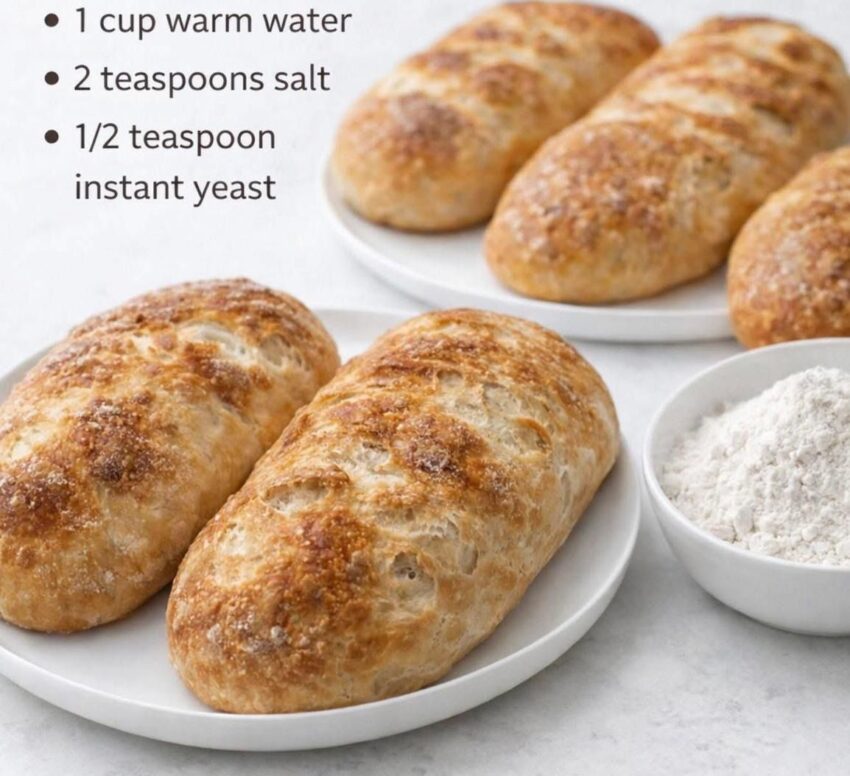
Learn how to make authentic ciabatta bread at home with this easy step-by-step recipe. This Italian artisan bread features a crispy crust, soft interior, and signature airy texture.
Ciabatta bread is a classic Italian bread known for its crispy crust, soft interior, and airy holes. The name “ciabatta” means slipper in Italian, referring to its flat, rustic shape. This bread is perfect for sandwiches, dipping in olive oil, or serving with soups and salads.
In this detailed guide, you will learn how to make homemade ciabatta bread step by step, along with tips to achieve the perfect chewy texture and crust.
Why You’ll Love This Recipe
Ciabatta bread is popular for many reasons:
-
Crispy golden crust
-
Light and airy interior with large holes
-
Perfect for sandwiches and paninis
-
Made with simple pantry ingredients
-
Classic Italian artisan bread
Ingredients
For the Dough
-
3 cups bread flour
-
1 1/4 cups warm water
-
1 teaspoon instant yeast
-
1 teaspoon salt
-
1 tablespoon olive oil
For Dusting
-
Extra flour or semolina flour
Equipment Needed
-
Large mixing bowl
-
Dough scraper
-
Baking sheet
-
Parchment paper
-
Kitchen towel
Step-by-Step Instructions
Step 1: Activate the Yeast
In a large bowl, combine warm water and yeast. Let it sit for about 5 minutes until slightly foamy.
Step 2: Mix the Dough
Add:
-
Bread flour
-
Salt
-
Olive oil
Mix with a spoon or spatula until a sticky dough forms. Ciabatta dough should be wetter than regular bread dough.
Step 3: First Rise
Cover the bowl with plastic wrap or a kitchen towel.
Let the dough rise at room temperature for 1–2 hours until it doubles in size and becomes bubbly.
Step 4: Stretch and Fold
Instead of kneading, ciabatta dough is developed using stretch and fold techniques.
-
Wet your hands slightly.
-
Lift one side of the dough.
-
Stretch it gently and fold it over the center.
Repeat this process 4–6 times around the bowl.
Let the dough rest for 30 minutes, then repeat once more.
This helps create the bread’s signature airy structure.
Step 5: Shape the Dough
Generously dust your work surface with flour.
Gently transfer the dough onto the surface without deflating it.
Divide the dough into 2 rectangular pieces.
Shape each piece lightly into a rough slipper-like loaf.
Step 6: Second Rise
Place the shaped dough on a floured parchment-lined baking tray.
Cover loosely with a towel and let rise for 30–45 minutes.
Step 7: Preheat the Oven
Preheat your oven to 220°C (425°F).
Place an empty baking tray on the lower rack to create steam later.
Step 8: Bake the Bread
Place the ciabatta loaves in the oven.
Pour a cup of hot water into the lower tray to create steam. This helps develop a crispy crust.
Bake for 20–25 minutes until golden brown.
Step 9: Cool Before Slicing
Remove the bread from the oven and let it cool on a rack for 15–20 minutes before slicing.
Serving Suggestions
Ciabatta bread is versatile and delicious in many ways:
-
Sandwiches and paninis
-
Garlic bread
-
Bruschetta
-
Dipping in olive oil and balsamic vinegar
-
Served with soups or pasta
Tips for Perfect Ciabatta
Use Bread Flour
Bread flour provides the gluten needed for the chewy texture.
Keep the Dough Sticky
Do not add too much flour. Ciabatta dough should be soft and wet.
Handle the Dough Gently
Avoid over-handling to preserve the air bubbles.
Use Steam in the Oven
Steam helps create the classic crispy crust.
Storage Tips
Room Temperature
Store ciabatta bread in a paper bag for up to 2 days.
Freezing
Wrap tightly and freeze for up to 2 months.
Reheating
Warm in the oven at 180°C (350°F) for about 5–8 minutes.
Final Thoughts
Homemade ciabatta bread may look rustic, but its flavor and texture are truly special. With its crispy crust, chewy crumb, and airy holes, this classic Italian bread is perfect for sandwiches, dipping, or enjoying fresh with butter and olive oil.
Once you try making ciabatta at home, it will quickly become one of your favorite artisan bread recipes.