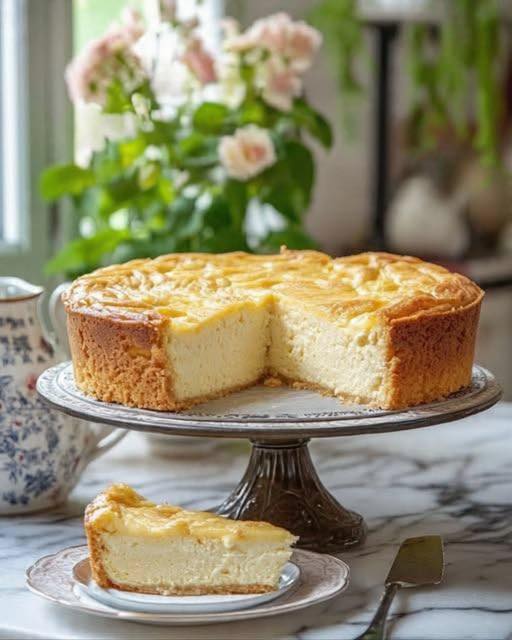
German Cheesecake is a traditional European dessert known for its light texture and delicate flavor. Unlike many other cheesecakes, it is typically made with quark, a fresh dairy product that gives the cake a slightly tangy taste and a lighter consistency. Baked on a buttery shortcrust base, this cheesecake is creamy, smooth, and less dense than American-style versions.
German Cheesecake
German Cheesecake is a classic dessert made with quark cheese and a buttery shortcrust base. This light and creamy cheesecake has a delicate flavor and smooth texture perfect for any occasion.
Introduction
German Cheesecake, known as Käsekuchen in Germany, is a beloved dessert served in bakeries and homes across the country. Its unique texture comes from quark, a fresh cheese that is lighter than cream cheese and creates a soft, airy filling.
This cheesecake usually sits on a thin shortcrust pastry base and is baked until lightly golden on top. The flavor is mildly sweet with a pleasant tang, making it less heavy than many other cheesecake varieties.
Because quark is not always available in some countries, it can be substituted with a mixture of cream cheese and yogurt or ricotta.
Preparation Time
Prep Time: 25 minutes
Bake Time: 60–70 minutes
Cooling Time: 2 hours
Total Time: About 3 hours 30 minutes
Servings: 10–12 slices
Ingredients
For the Crust
-
1½ cups all-purpose flour
-
½ cup granulated sugar
-
½ cup unsalted butter, cold and cubed
-
1 egg
-
1 teaspoon vanilla extract
-
¼ teaspoon salt
For the Cheesecake Filling
-
500 g quark cheese (or substitute with ricotta and cream cheese mixture)
-
1 cup granulated sugar
-
3 large eggs
-
1 cup heavy cream
-
2 tablespoons cornstarch
-
1 teaspoon vanilla extract
-
1 tablespoon lemon juice
-
1 tablespoon lemon zest
Optional topping:
-
Powdered sugar for dusting
Equipment Needed
-
9-inch springform pan
-
Mixing bowls
-
Electric mixer or whisk
-
Spatula
-
Rolling pin
Step-by-Step Directions
Step 1: Preheat the Oven
Preheat the oven to 175°C (350°F). Grease a 9-inch springform pan and line the bottom with parchment paper.
Step 2: Prepare the Crust
In a bowl, mix the flour, sugar, and salt.
Add the cold butter and rub it into the flour mixture until crumbly.
Add the egg and vanilla extract, then mix until the dough forms.
Wrap the dough in plastic wrap and refrigerate for about 20 minutes.
Step 3: Form the Crust
Roll out the chilled dough on a lightly floured surface.
Press it into the bottom and slightly up the sides of the springform pan to create a thin crust.
Place the pan in the refrigerator while preparing the filling.
Step 4: Prepare the Filling
In a large bowl, beat the quark cheese with sugar until smooth.
Add the eggs one at a time, mixing gently after each addition.
Step 5: Add Remaining Ingredients
Mix in the heavy cream, cornstarch, vanilla extract, lemon juice, and lemon zest.
Continue mixing until the filling becomes smooth and creamy.
Step 6: Pour the Filling
Pour the cheesecake filling into the prepared crust and smooth the top with a spatula.
Step 7: Bake the Cheesecake
Place the cheesecake in the preheated oven and bake for 60–70 minutes.
The top should be lightly golden and the center slightly set.
Step 8: Cool the Cheesecake
Turn off the oven and leave the cheesecake inside with the door slightly open for about 30 minutes. This helps prevent cracks.
Remove from the oven and allow it to cool completely at room temperature.
Step 9: Chill Before Serving
Refrigerate the cheesecake for at least 2 hours before slicing.
Dust with powdered sugar before serving if desired.
Serving Suggestions
German Cheesecake can be served with:
-
Fresh berries
-
Fruit compote
-
Whipped cream
-
A cup of coffee or tea
Storage Tips
Refrigerator: Store the cheesecake in an airtight container for up to 4 days.
Freezer: Wrap slices tightly and freeze for up to 2 months.
Allow frozen cheesecake to thaw overnight in the refrigerator before serving.
Tips for the Best German Cheesecake
Use room-temperature ingredients to create a smooth filling.
Do not overmix the batter to maintain a light texture.
If using ricotta instead of quark, drain excess liquid to prevent a watery filling.
Allow proper cooling time so the cheesecake sets well.
Variations
Raisin German Cheesecake
Add ½ cup soaked raisins to the filling.
Crustless German Cheesecake
Bake the filling without a crust for a lighter version.
Cherry Topped Cheesecake
Top the cheesecake with sweet cherry compote before serving.
Conclusion
German Cheesecake is a delicate and creamy dessert that offers a lighter alternative to heavier cheesecake styles. Its soft quark-based filling and buttery crust create a balanced and satisfying treat. Perfect for celebrations or afternoon coffee, this traditional dessert continues to be a favorite in many homes and bakeries.